


ONLINE | ON-DEMAND | SELF-PACED Course | Instructed by Dr. Torben L. Skovhus and Richard B. Eckert
Why investigate the cause of corrosion damage?
Investigation of corrosion damage and corrosion failures provides important information that can be used to select and optimize corrosion mitigation measures. Proper analysis can also help to identify the best corrosion and biofilm monitoring measures. In this course you will learn best practices for MIC and corrosion failure investigation, including the chemical, microbiological and metallurgical methods that can be employed. Integration of multiple lines of evidence is emphasized.
Molecular methods, such as qPCR and sequencing can provide valuable insights to corrosion and MIC issues when they are performed and interpreted correctly. Learn how to apply the latest MMM technologies in corrosion investigation and assessment.
Learn to apply your new knowledge in practical case studies. See how multiple lines of evidence are used to diagnose cases of MIC and consider abiotic corrosion mechanisms that are not related to microbiology.
This course provides a complete step-by-step guide for assessing and controlling corrosion in engineered assets based on the latest corrosion management principles used by leading industries around the world.
This comprehensive course provides participants with the knowledge and practical skills required to investigate, interpret, and prevent future corrosion-related failures in industrial assets. Beginning with an overview of corrosion management principles and forensic corrosion engineering, learners will explore methods for diagnosing microbiologically influenced corrosion (MIC) and differentiating between abiotic and biotic mechanisms. The course covers field preparation, sampling strategies, chemical and microbiological analyses, metallography, and advanced diagnostic tools such as SEM, qPCR, and DNA sequencing. Through guided case studies, including pipeline and stainless-steel tubing failures, participants will learn to integrate multiple lines of evidence (MLOE) to determine corrosion mechanisms and root causes. Emphasis is placed on data interpretation, sample preservation, and applying standards, models, and best practices. Interactive activities, expert insights, and updated resources ensure learners gain both theoretical understanding and field-ready competence in corrosion failure analysis.
 Dr. Skovhus states, “The goal of this course is to equip students with the knowledge and resources to understand the process of corrosion failure analysis, including:
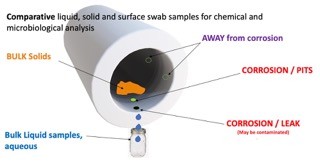
• Being able to collect the necessary samples from corroded assets
• Being able to select the most appropriate analytical and testing methods
• Being able to identify the background, operation and design information needed to reliably determine the cause of corrosion damage
• Being able to help direct third party service providers and consultants who are used to perform corrosion failure analysis and testing
• Learning the true causes of corrosion failures to prevent future failures
KEY BENEFIT: Real-World Application of Course Content
INSTRUCTORS:
 Dr. Torben Lund Skovhus is Principal Owner of Skovhus BioConsult (SBC) and is also Docent & Project Manager at VIA University College in the Research Center for Built Environment, Climate and Water Technology, Denmark. He has over 25 years of experience with industrial and applied research. Dr Skovhus is an AMPP Fellow and chair of the ISMOS Technical and Scientific Committee. He has edited ten books and is the author of 200+ technical and scientific papers and book chapters related to industrial microbiology, applied biotechnology, corrosion management, oilfield microbiology, water treatment and safety, reservoir souring and microbiologically influenced corrosion (MIC). He is co-editor of “Failure Analysis of Microbiologically Influenced Corrosion” from 2021 (CRC Press).
 Richard Eckert, Principal Owner of Microbial Corrosion Consulting, LLC, has over 43 years of experience with oil and gas industry corrosion/failure investigations, internal corrosion and MIC assessment, mitigation and management; materials selection, forensic corrosion engineering, litigation support and regulatory compliance. He is the author of 4 books and over 50 publications on internal corrosion mitigation and monitoring, corrosion failure investigation and microbiologically influenced corrosion. Mr. Eckert is a NACE International certified Internal Corrosion Specialist, and AMPP Fellow. He previously served on the NACE Board of Directors and has chaired a number of technical committees that produced standards on corrosion management and internal MIC of pipelines. He is co-editor of “Failure Analysis of Microbiologically Influenced Corrosion” from 2021 (CRC Press) and is frequently lecturing and teaching on the topic of MIC.
This Course is DESIGNED for:
• Corrosion, materials, operations, integrity and engineering professionals from large oil and gas exploration and production companies to small producers
• Midstream and downstream gas and liquid pipeline/facility operators
• Industries where assets are exposed to water or other corrosive conditions, including power generation, wastewater treatment, chemical manufacturing, drinking water systems, and marine/maritime assets
• Chemical treatment vendors and consultants
• Materials Science, Metallurgy and Microbiology students preparing to enter the workplace.
• Tank farm operators; truck and rail transportation of hydrocarbons
• State and Federal Regulators and Inspectors
• Oil and Gas Service Company Personnel
• Anyone interested in failure analysis and corrosion investigation
COURSE FORMAT:
• Online, On-Demand, Self-Paced
• 10 Learning modules with a total of 76 different activities (PowerPoint + audio/video) and 11+ hours of content!
• Case studies and student practice exercises
• Useful forms and checklists included for download
• Downloadable PDFs of all course notes
• Self-Assessments/Quizzes for each lesson
COURSE CONTENT OVERVIEW:#1: Introduction #2: Sampling & Field Procedures #3: Chemical Analysis #4: Microbiological Analysis #5: Metallurgical Analysis |
#6: Design & Operating Conditions – Design Features to consider during an investigation – Material selection and fabrication – Operating conditions P, T and V – Upset, shutdown or emergency conditions – History of issues in same or similar assets #7: Data Integration to Identify Cause of Corrosion #8: Case Studies: Application of Principles Learned #9: Explore Further: Key Learning Points #10: Resources for More Information QUESTIONS about the course content are welcome at any time. |
CONTINUING EDUCATION and CERTIFICATION: This program meets the criteria for educational continuing professional development credit requirements in various state and national professional organizations.
Earn CEUs & PDHs : Participants can earn valuable Continuing Education Units (CEUs) and Professional Development Hours to maintain their professional certifications.
Certificate of Completion: Successfully completing the entire course, demonstrating your enhanced knowledge and skills, the participant will have earned and will be awarded the full CEUs/PDHs and receive a TU-CESE Certificate of Completion. We ask participants self-report their attendance/completion to their organization.
PDHs/CEUs awarded for Course Completion:
• 10 PDHs (Professional Development Hours)
• 1.0 CEU (Continuing Education Unit)
REGISTRATION INFORMATION & FEE (net US dollars):
INDIVIDUAL Registrations @ $995.00 per person
GROUPS of 4 or more from the same company are eligible for a discounted rate of $845/person. Sign your TEAM up today!
Once you register and pay the registration fee, you will receive an email from the University of Tulsa CESE with your unique username and password with instructions on how to access this online course. We recommend this online/self-paced course be completed in a two-month period.
Use one of these links to sign-up today:
You might also be interested in Rick and Torben’s other online training program:
Managing MICROBIOLOGICALLY INFLUENCED CORROSION (MIC): Threat Assessment, Mitigation and Monitoring